Skip to content

Diabetes Amigo

Supporting the parents and caregivers of kids diagnosed with Type 1 Diabetes

  • Easing Injections
  • Carb Counting
  • Travel
  • Sports
  • Home
  • #t1d

Tag: #t1d

Cruise with T1D

Posted on August 29, 2025January 14, 2026 By Diabetes Amigo
Cruise with T1D
Travel

Living with Type 1 diabetes doesn’t mean you have to anchor your dreams of adventure, especially when it comes to cruising. From managing blood sugar levels on the open water to navigating dietary needs at sea, this journey requires thoughtful planning.

Know Before You Go / Sea Sickness / Ship Security / Packing Checklist / Supplies

This post may contain affiliate links. Please see the affiliate disclosure for more details.

Know Before You Go

Guest Services at the various cruise lines are familiar with people living with diabetes and typically offer the following services/exemptions:
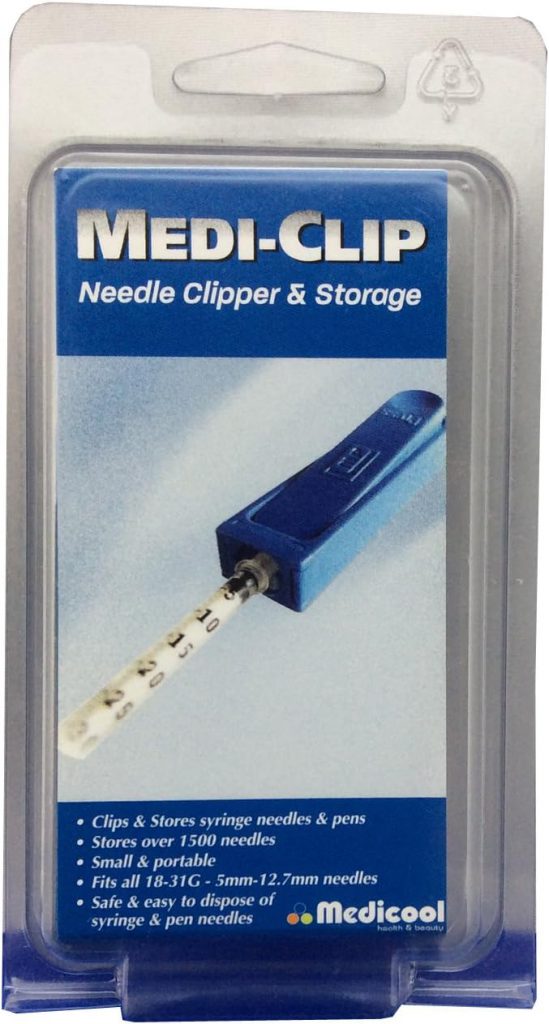
Needle Clip
  • Sharps containers for in-room use (some public restrooms may have sharps disposal)
    • Tip: Skip a sharps container and use a needle clip instead
  • Portable medi-coolers for insulin storage or ice buckets
  • Mini fridges to maintain the temperature of beverages (i.e., juice or milk)
  • Free Wi-Fi for the management of medical devices (i.e., CGM or pump data), but typically requires a letter from your doctor
  • Liquids exemption – allows you to board the ship with water, juice, and shelf-stable milks that are used for lows/hydration. This exemption also applies to liquids when reboarding the ship from ports of call.
  • Food exemption – allows you to bring food on board for the treatment of lows.

As soon as you book your cruise, email Guest Services for any special needs/requests to allow time to gather any requested documentation and to ensure availability.

Travel Insurance
Consider if travel insurance is something you need. Some travel insurance plans cover medical transport, if needed.

Sea Sickness Prevention

If prone to motion sickness, it might be a good idea to prepare your body for the motion of the cruise ship. Consider taking any of the following the night before the start of the cruise.
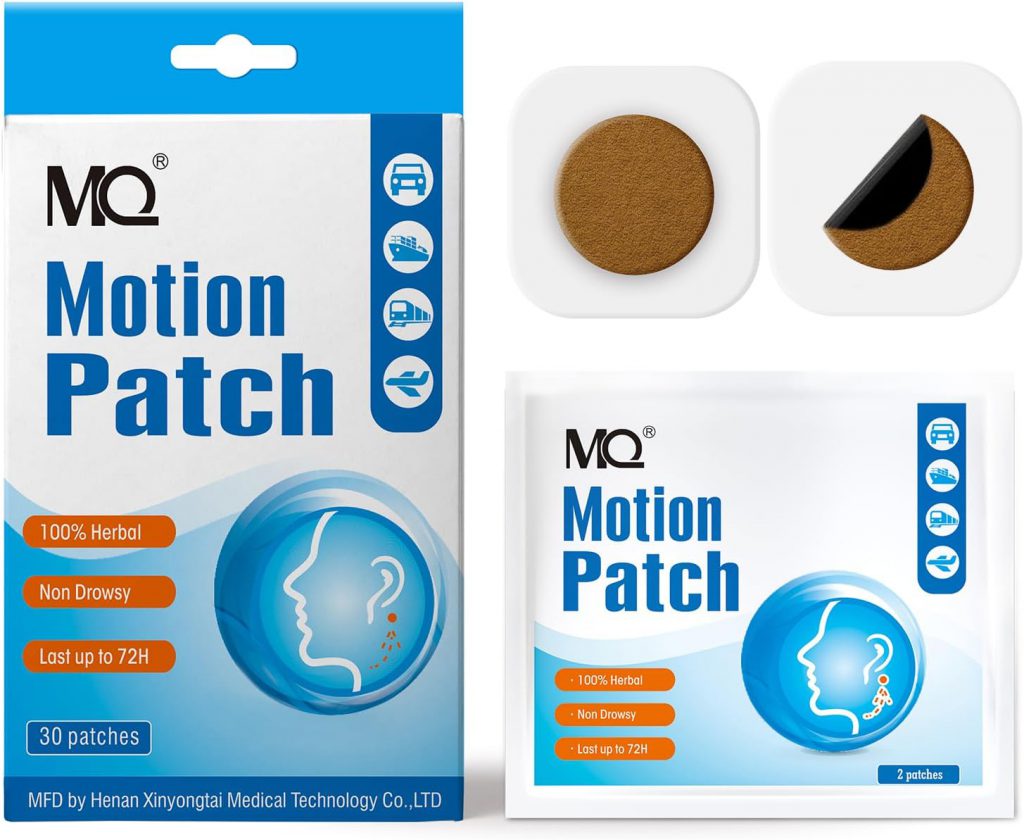
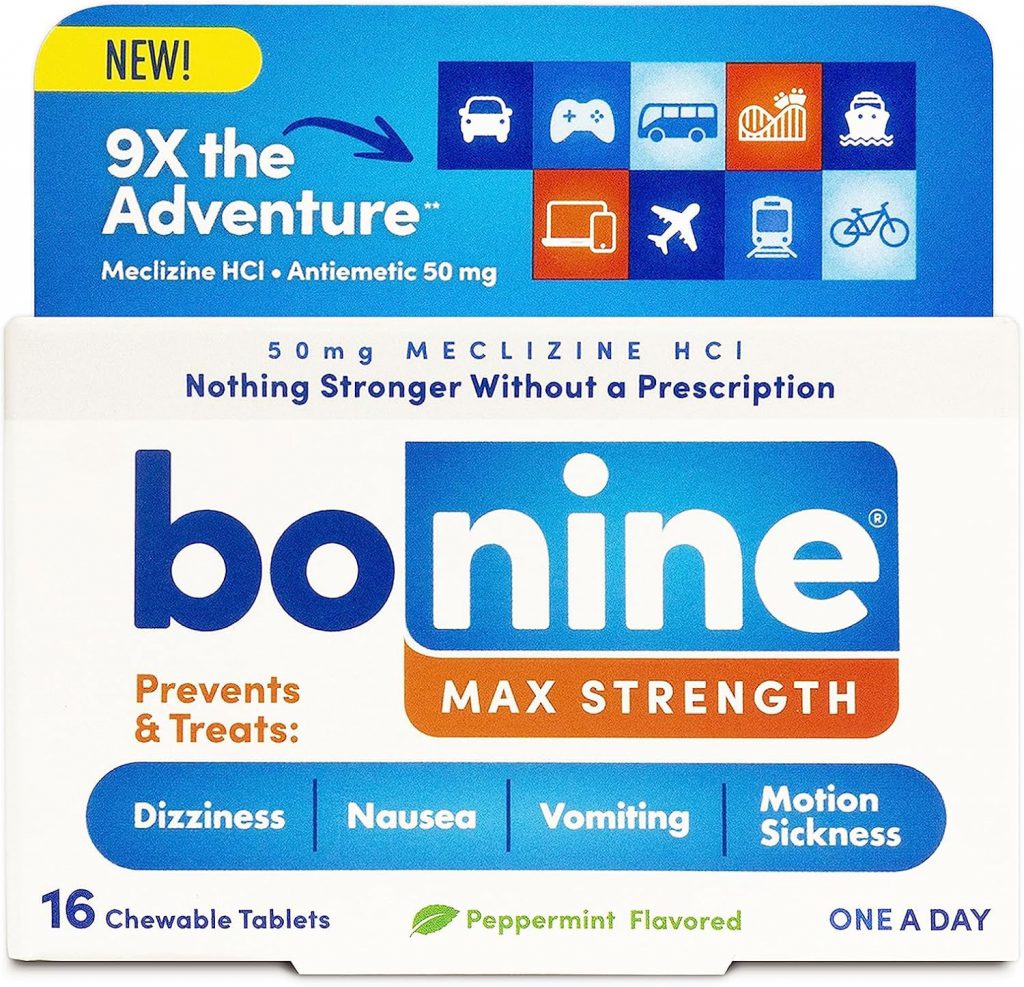
Motion Patch

Bonine

Ginger Supplement

If feeling sea sick during the cruise, a ginger candy or tea can help settle your stomach.

Ginger Tea

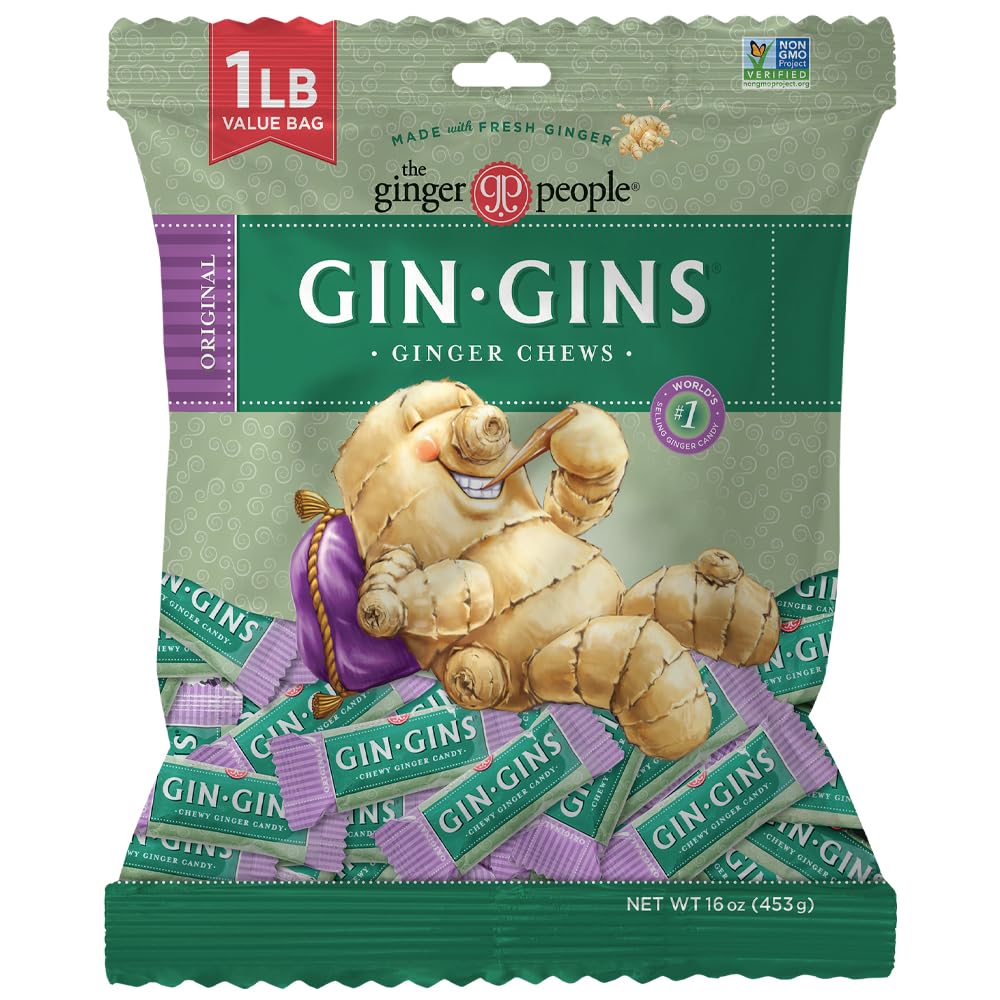
Ginger Candy
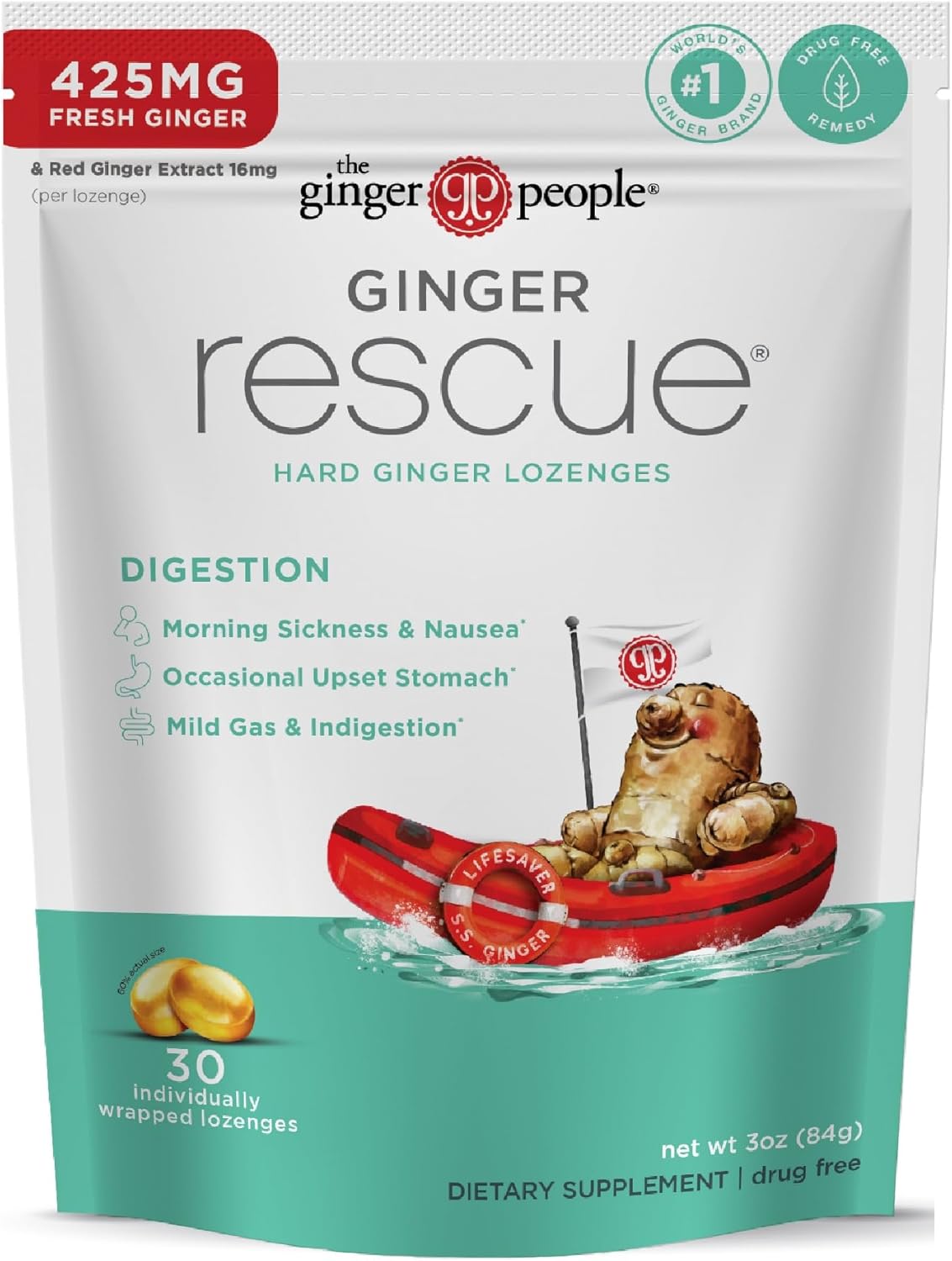
Ginger Rescue

Cruise Ship Security

Be prepared to have your diabetes supplies and other carry-on items scanned. Cruise ship boarding is very similar to flying and going through TSA at the airport. The person wearing medical devices will also be asked to walk through an X-ray/body scanner machine.

Consider which supplies you are comfortable having x-rayed, and/or check the user manuals for each medical device to determine whether x-raying is permitted. Many people with diabetes have their supplies x-rayed and report no issues. I avoid having medical supplies/devices (CGM, Omnipods, backup pumps, and spare meters), and the person wearing them go through an X-ray.

If cruising internationally, bring copies of your prescriptions, the medication box, and/or a letter from your doctor.

T1D Packing Checklist

The Cruise Packing Checklist is organized by topic and includes items for diabetic supplies, chargers, extra adhesive, considerations for water activities, seasickness, and other miscellaneous needs during a cruise. The quantity of supplies is not listed because it will vary based on your length of stay and travel type. It is recommended to bring triple the required supplies.

Download the editable MS Word T1D Cruise Packing Checklist:
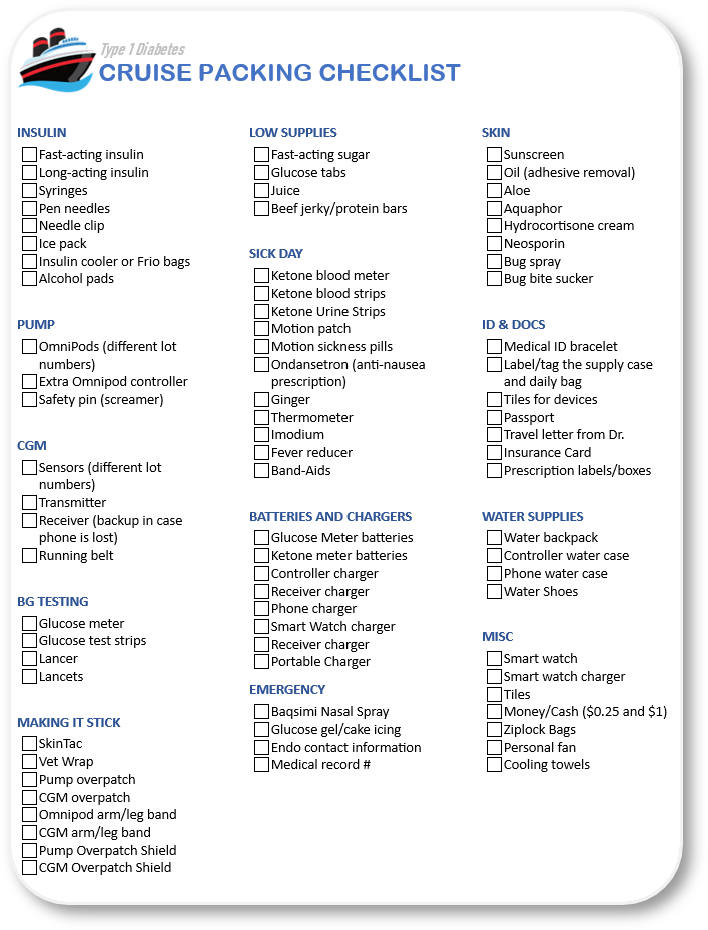
T1DCruisePackingChecklistDownload

Packing T1D Supplies for a Cruise

Bring all your diabetes supplies on your cruise as carry-on items. An organized carry-on bag is key for getting through security efficiently. Consider packing your diabetes supplies in three (3) packing cubes:

  1. Non X-Rayed Supplies
    • CGM Sensors
    • CGM Transmitter
    • Ominpod Pods
    • Spare Glucose Meter
    • Blood Ketone Meter
  2. X-Rayed Supplies
    • All other supplies
  3. Sick Day/First Aid Kit

Only the non-x-rayed packing cube needs to be removed from your carry-on bag and handed to security so that it will not be scanned. Keeping only the supplies that you don’t want x-rayed separate makes getting through security faster.

T1D on the Cruise Ship

A few random tips that are helpful for managing Type 1 Diabetes while on a cruise ship:

  • Take a tour of the boat to familiarize yourself with the ship’s medical services and first aid stations.
  • Develop a plan for time change zones (especially if pumping) and if any considerations are needed to manage your blood sugar/insulin delivery.
  • If pumping, call your pump company to request a spare/backup pump for travel.
  • If using a phone with cellular service, keep the phone in airplane mode or request free Wi-Fi.
  • At mealtime, ask your server (or take food from the buffet) for a snack to keep in the room for overnight lows (PB&J or cookies) or to take on excursions.
  • Bring storage bags for ice and food storage.
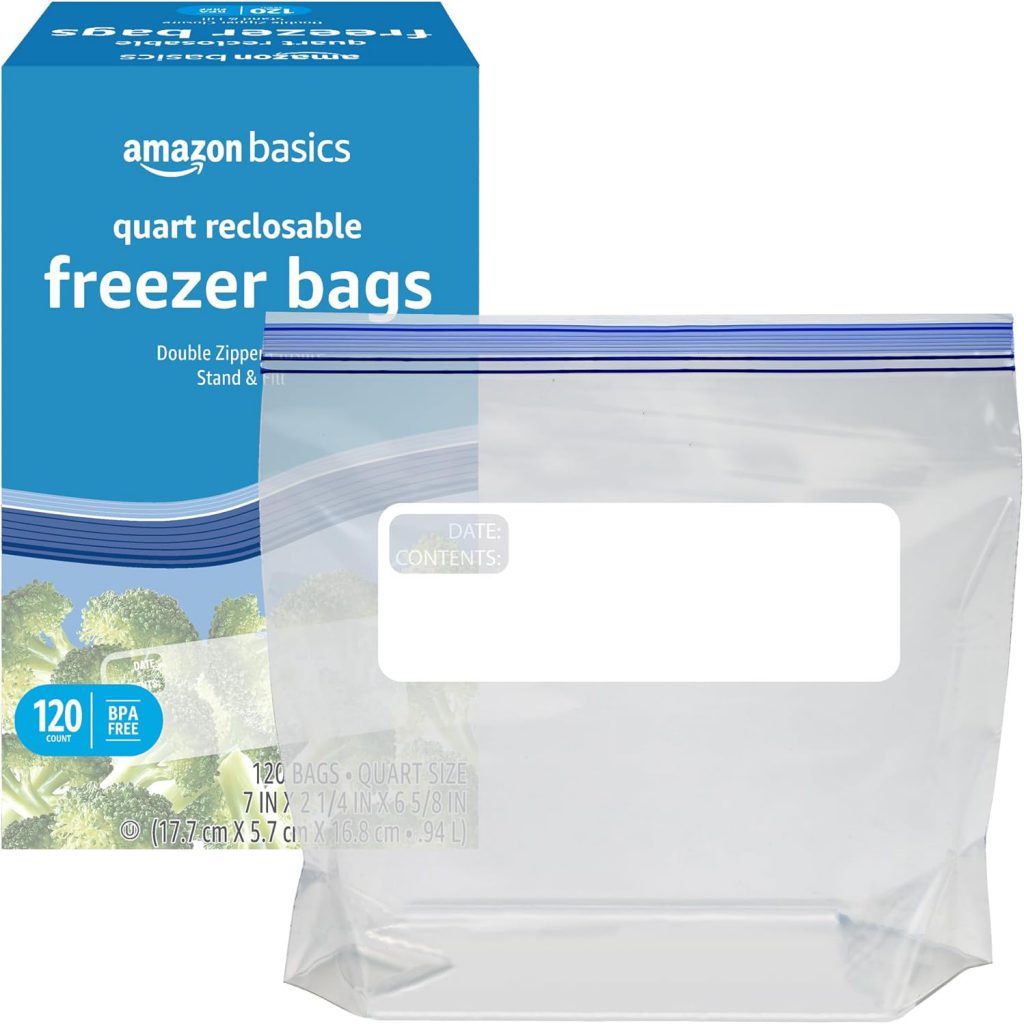
Storage Bags

Cruise with Other People Living with Type 1 Diabetes

If you are looking to cruise with others who live with Type 1 Diabetes, consider the 1 Sweet Cruise.
Tips for Measuring Food for Carb Counts

Posted on April 20, 2021January 4, 2022 By Diabetes Amigo
Tips for Measuring Food for Carb Counts
Day-to-Day T1D

Every carbohydrate counts for my child’s blood sugar to stay in range. Detailed are tips for measuring carbohydrates to obtain accurate carbohydrate counts.

Types of Measuring Cups / How to Measure / Measuring on the Go

Types of Measuring Cups

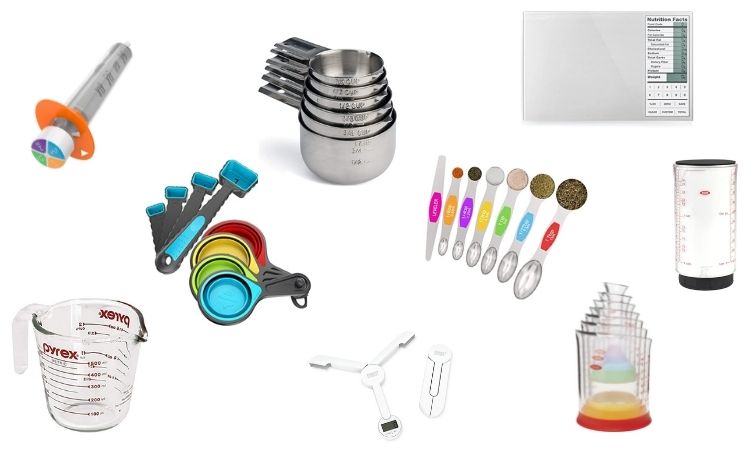
It is important to use the right measuring tool to accurately measure ingredients to get an accurate carb count. The type of measuring tool used is based on if the ingredient is wet or dry. If a wet measuring cup is used to measure dry ingredients the measurement will be incorrect and might result in an undesired blood sugar high/low.

  • Wet – used to measure liquids. Measure items like juice, milk, or applesauce.
    • Pyrex set
  • Beaker – works great when measuring smaller liquid/wet amounts. Measure items like maple syrup, juice, or honey.
    • Nesting beakers
  • Sticky – perfect for measuring liquids that are more solid. Measure items like peanut butter, yogurt or honey.
    • Sticky measuring cup
  • Oral Syringe – helpful when measuring precise amounts of a wet ingredient to avoid over-treating a low. Also helpful for dispensing liquids into a sleeping child’s mouth. Measure items like maple syrup, juice, or cake gel.
    • Oral syringe
  • Dry – used to measure dry/non-liquid ingredients. Measure items like cereal, dried fruit, or nuts.
    • Dry measuring cups
    • Collapsing dry measuring cups
  • Measuring Spoons – smaller measuring tool that can measure wet or dry ingredients. Measure items like sugar, maple syrup, or glucose powder.
    • Measuring magnetic spoons
    • Collapsing measuring spoons
  • Food Scale – a food scale measures wet, dry or hard to measure ingredients. A food scale is helpful for measuring foods that do not fit perfectly into measuring tools. Most scales measure in ounces or grams and have a tare feature. The tare feature allows for subtracting the weight of the container holding the wet/dry ingredient. Also, look for a digital scale that has food codes for carb counts on common foods based on weight.
    • Perfect portions food scale
    • Smart food scale

How to Measure Carbs

  • Wet Ingredients – using a flat surface, add the liquid to the desired measure marking. Wait for the liquid to stay still, move your eyes to the same level as the measuring cup and make sure liquid level is at the desired mark (align the bottom of the curved surface [called a meniscus] with the markings on the measuring cup).
  • Dry Ingredients – spoon/scoop ingredients into the measuring cup. Level off the top of the measuring cup with the back of a knife or other flat surface.
  • Measuring Spoons – scoop ingredients into the measuring spoon. Level off the top of the measuring spoon with the back of a knife or other flat surface.
  • Food Scale – every scale is different so refer to your scale’s manual. Most scales:
    1. Turn on the scale.
    2. Choose the gram or ounces option (look at the food’s nutritional label to determine which option to choose).
    3. If using a container place the cup/bowl/plate on the scale and tare the weight of the container.
    4. Place/pour/scoop/spoon the ingredient into the container or place the food directly on the scale.
    5. Calculate the carbohydrates based on the weight of the food item and the nutritional label serving size information.

Measuring Carbs when Traveling

Products that I have found that work best when traveling to count carbs:

  • Folding food scale
  • Collapsible measuring cups/spoons
  • Water bottle with ounce markings
  • Calorie King book provides carb counts for most food items including restaurants/fast food

Decorating OmniPod Pods

Posted on April 3, 2021August 5, 2022 By Diabetes Amigo
Decorating OmniPod Pods
Day-to-Day T1D

This post may contain affiliate links. Please see the affiliate disclosure for more details.

If you like to show off your OmniPod (or maybe would like to not hear “what is that on your arm?”), decorate your pod! Keep in mind that some decorating techniques also help reduce pod static failures.

Decorating Tips / Products / Storage

Decorating Techniques

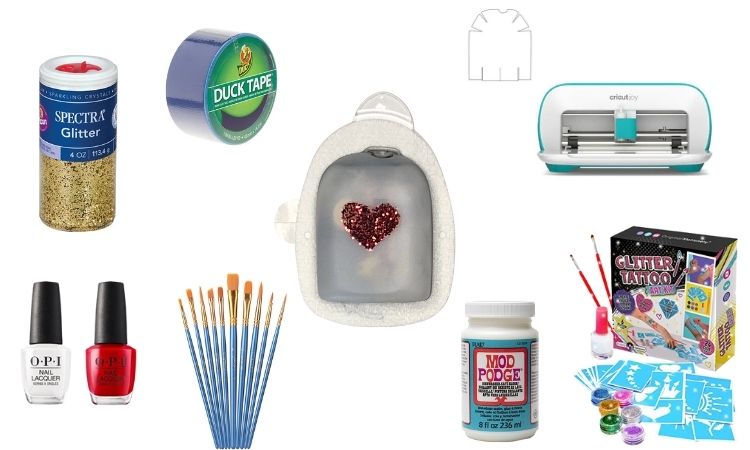
  • Duct Tape – cover an entire pod (excluding the adhesive) with duct tape. Consider buying duct etape that has preprinted colors, designs and cartoon characters to decorate the pod.
    • Duct Tape / Colored Duct Tape / Patterned Duct Tape
    • Gorilla Tape
  • Nail Polish – cover an entire pod (excluding the adhesive) with nail polish for a solid color or create nail polish art with several colors. Finish the design with clear nail polish or mod podge to seal the design.
    • Nail polish art set
    • Nail polish pens
    • Clear nail polish
    • Mod podge
  • Stickers with a Clear Coat – find your favorite design in a sticker, adhere it to OmniPod and then apply clear nail polish or mod podge to seal the sticker.
    • Make your own stickers
    • Print your own stickers
    • Sticker Book with 1000 stickers
    • Clear nail polish
    • Mod podge
  • Temporary Tattoos – apply a temporary tattoo (messages, art, cartoon characters and so on) according to the tattoo’s directions. Then apply clear nail polish or deco podge to seal the tattoo.
    • Variety pack of tattoos
    • Tattoo glitter stencils
    • Make your own temporary tattoos
    • Clear nail polish
    • Mod podge
  • Glitter – cover a pod with clear nail polish or mod podge, before it dries sprinkle on glitter and then add another clear coat (clear nail polish or mod podge) to seal the glitter.
    • Glitter
    • Clear nail polish
    • Mod podge

Pod Products

Preprinted pod shaped stickers and covers are sold by various vendors.

  • T1 Decals – vinyl stickers that are shaped perfectly to fit OmniPod.
  • Pump Pleelz – vinyl stickers that are shaped perfectly to fit OmniPod.
  • Shapeways – reusable OmniPod covers that cap on to the pod.
  • PumpSuitCover – German company offering reusable pod covers.
  • Mused Mediums – reusable OmniPod covers that cap on to the pod. The company has a Facebook group Diabetes Omnipod/Dexcom/Libre Water Marbling displaying many of their designs.
  • Just Fly Design – Type 1 Mom that designs custom and unique pod covers and stickers for OmniPod and Dexcom.
  • Sugar Fam Color Your Diabetes – Dutch company offering reusable OmniPod covers that cap on to the pod.
  • OmniPod Snaps – reusable OmniPod covers that cap on to the pod.

Storing Decorated Pods

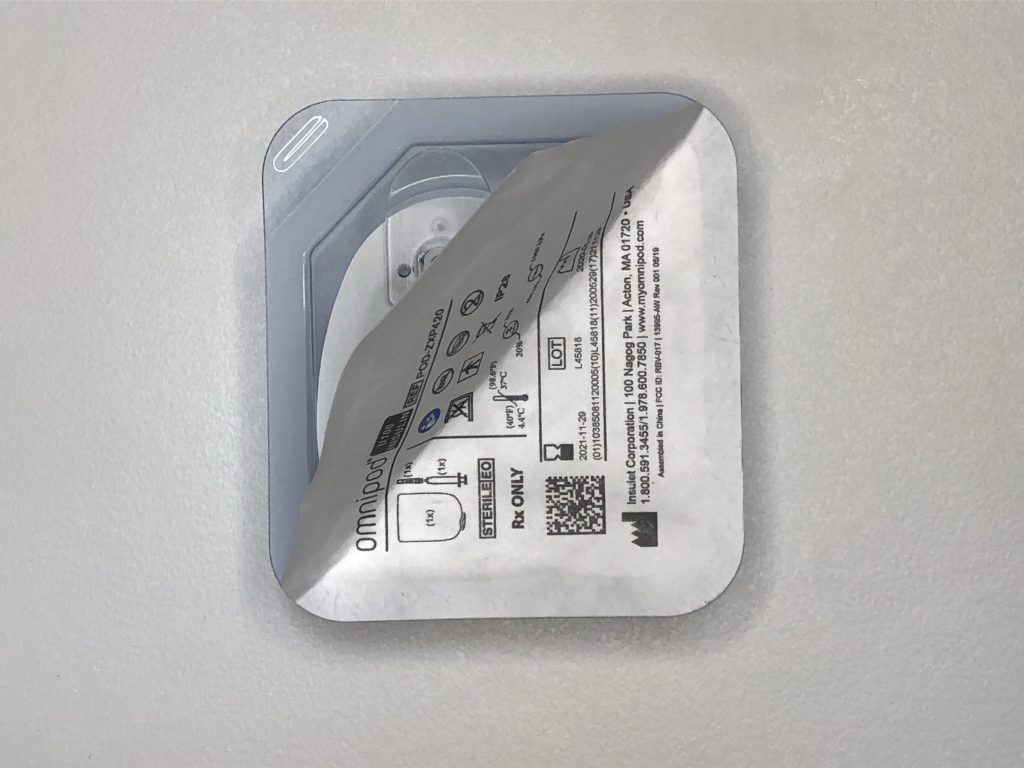
Keep the pod’s packing (paper seal, syringe, and plastic) to store the decorated pods. Lift the pod’s paper seal just enough to remove the pod. Decorate the pod, place the dry decorated pod back into the original packaging and tape the paper seal with scotch tape. Pods can then be placed back in the original box and stored.

Try to keep the pod, its packaging and box together for lot tracking purposes in case of pod failures.

Donating Unused Supplies

Posted on February 14, 2021August 17, 2022 By Diabetes Amigo
Donating Unused Supplies
Day-to-Day T1D

This post may contain affiliate links. Please see my affiliate disclosure for more details.

Donating unused diabetic supplies is a fantastic way to help other diabetics.

Organizations / Other Ideas

Organizations

  • Insulin for Life – collects in-date & unneeded insulin, test strips, as well as other diabetes supplies, and ship them to developing countries. Donated supplies are distributed, free of charge, to children and adults with diabetes who otherwise would go without these lifesaving medications. To donate view:
    • Supply packing tips
    • Download the shipping form and label
  • CR3 Diabetes Association, Inc – collects supplies for people living with diabetes all over the world by providing knowledge, equipment and encouragement to those in need. To donate review their website for details.
    • Needed supplies and shipping information
  • SafeNexRx – provides affordable medication access to Iowans in need of assistance. Accepts sealed and unexpired lancets, syringes, needles, and glucose test trips.
    • Donation form and mailing address
  • Integrated Diabetes Services – collects many types of diabetes equipment and supplies (almost anything but lancets) to distribute by request to people with diabetes in the US and around the world.
    • To donate or request supplies, call 1-877-735-3648.
  • The Embrace Foundation – Diabetics helping Diabetics to send supplies to those who can’t obtain them. Donate supplies or complete a request form for T1D supplies.

Other Ideas

  • Dr’s Office – contact your Endo office to determine if they collect donated supplies.
  • Network – create your own network of individuals that could use your extra supplies by meeting them at local events like walks, Diabetes Camp, or Facebook groups.
  • Associations – contact your local JDRF or ADA associations.
  • T1D Rescue Warriors – Facebook group that helps Type 1 Diabetics find the insulin, diabetic supplies, referrals, and/or get questions and answers about hospitals and doctors in all towns across the world. 

Diabetes Medical Waste Recycling and Disposal

Posted on November 8, 2020August 14, 2022 By Diabetes Amigo
Diabetes Medical Waste Recycling and Disposal
Day-to-Day T1D

This post may contain affiliate links. Please see my affiliate disclosure for more details.

Help reduce the environmental impact of Type 1 Diabetes management by knowing how to properly dispose of the medical waste produced.

The options for medical waste disposal varies by state. Check your states requirements and dispose of accordingly.

Waste Types / Sharps / CGM / Pumps / Travel

Waste Types

Regular, recyclable, medical/sharps and mixed waste are all present in diabetic supplies.

Look for a recycling symbol on test strip boxes, infusion set boxes, packaging inserts, plastic needle caps and dispose of in the recycling waste bin.

The options for medical/sharps waste disposal varies by state. Check your states requirements and dispose of accordingly.

Mixed waste can refer to any combination of different waste types. Typically medical devices like CGMs (Dexcom and Libre) and pumps like OmniPod are this type of waste. Call your trash/waste company to determine if they have a mixed waste disposal location or program.

Sharps

Here are few ideas from various states on how to dispose of your used sharps.

  • Sharps Container – purchase a sharps container with with or without return postage.
    • Sharps container with no return postage
    • Sharps container with return postage for disposal
  • Alternative Sharps Container – the FDA provides guidelines for medial waste disposal when not using a sharps container. The basics are to find a non-permeable container with a lid, label the container with “sharps” and fill it. When full, dispose of according to your state’s rules. Non-permeable container ideas include:
    • Juice bottle
    • Coffee creamer bottle
    • Laundry detergent bottle
  • Needle Clip – A needle clip eliminates the need for a sharps container for syringes and pen needles. Simply clip the needle and the needle clip retains the clipped needle. Once the needle clip is full (1500 needles), the entire device is disposed of according to state laws. Great for home use or when traveling.
    • BD Safe-Clip Needle Clipping and Storage Device
  • Endocrinologist – ask your Endo’s office if they assist in disposal of sharps.
  • Public Services – fire departments, police stations and/or your local hospital may offer disposal options.
  • Trash Company – call your trash/waste company to determine if they have a sharps and/or mixed waste disposal location.
  • Pharmacy – local pharmacies may offer drop-offs for sharps containers.
  • County Health Department – may offer sharps container exchange program (full container for an empty container).

CGMs

The Dexcom CGM G6 applicator is made of non recyclable plastic and is considered mixed waste (sharps, metal and regular waste). Check with your local trash/waste company to inquire about proper disposal for mixed waste. Used sensors can be placed in the Sharps container.

Dexcom’s G6 applicator can be broken down to separate the mixed waste. View a video on How to Recycle Your Dexcom G6 Inserter.

The Libre sensor pack is regular waste, the applicator is mixed waste and the used sensor should be disposed of in the sharps container.

Pump Site Changes

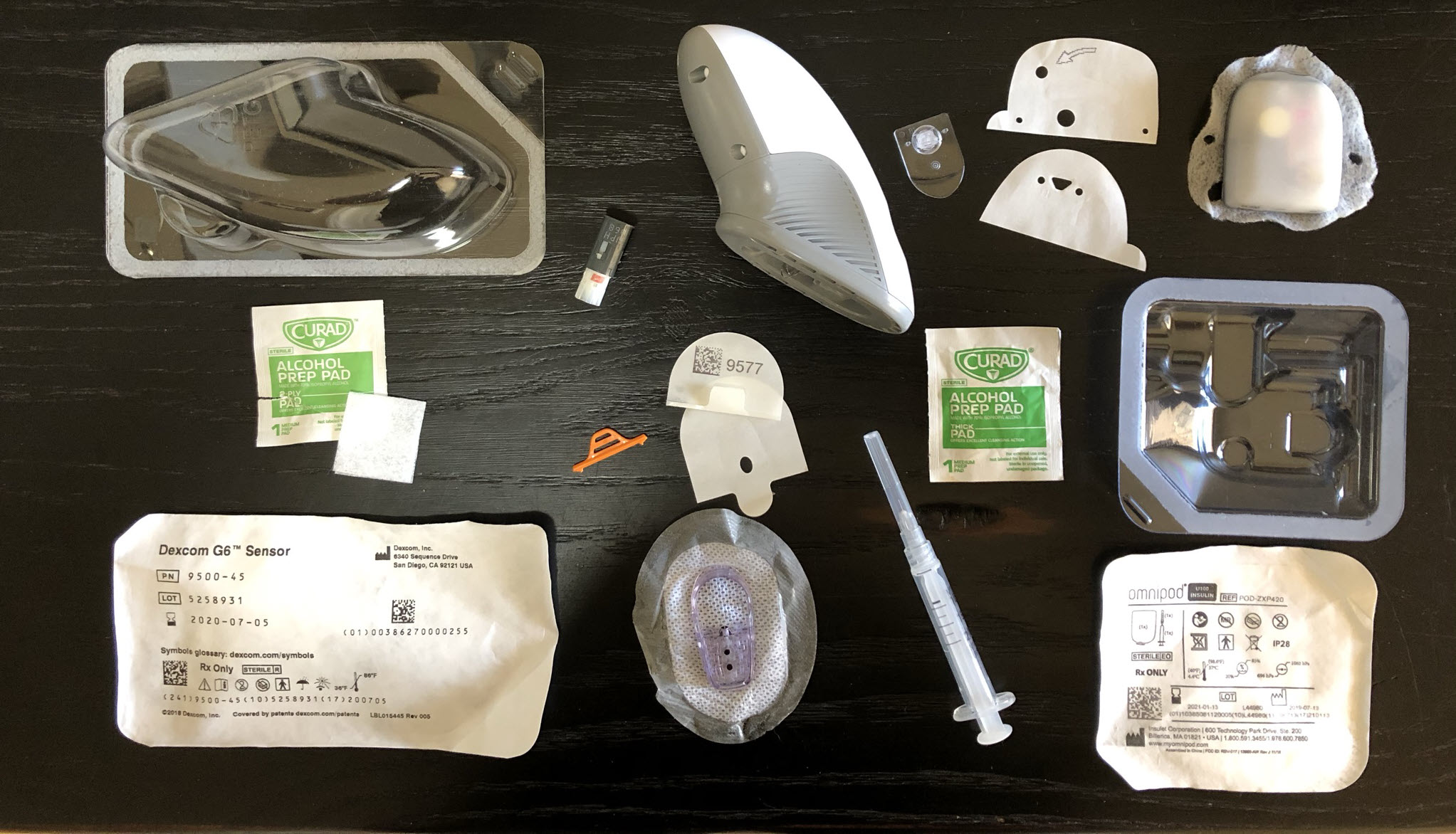
OmniPod – a used OmniPod is considered mixed-waste (sharps, plastic and batteries are all inside a pod). Insulet offers recycling of used pods for podders in Canada and the United Kingdom. The recycle program in the USA was retired in 2018. For podders in the USA, it is recommend to contact your local trash/waste company to inquire about proper disposal for mixed waste.

Look for recycling symbols on other pump infusion set and packaging and dispose of according.

Travel

When traveling, sharps containers can be found at airports, theme parks, first aid stations at large attractions and most hotels and cruise lines offer medical waste disposal container / services.

The needle clip or a travel sharps container / tube are great medical waste disposal options when traveling.

When proper waste management is not possible, we pack-up and bring home for disposal.


This post may contain affiliate links, which means if you click on a link and purchase something, I may earn a small commission (at no additional cost to you).

Adaptive Clothing T1D Style

Posted on May 20, 2020August 17, 2022 By Diabetes Amigo
Adaptive Clothing T1D Style
Other Stuff

This post may contain affiliate links. Please see the affiliate disclosure for more details.

Adaptive clothing comes in many forms from apparel with soft no-tag fabrics to t-shirts with pockets holding tubed pumps or cell phones. The need for apparel to do more beyond its basic function is becoming increasing common. Major retailers are offer clothing and accessories lines specifically for helping adults and kids with special needs. Further retailers are featuring models wearing CGMs and pumps.

Type 1 Diabetics and their caregivers have seen the need for adaptive clothing to make diabetes care easier and have created clothing solutions. Below is a list of adaptive clothing/accessories designers, T1D lifestyle brands, and a regular clothing items that just work well with diabetes devices.

T1D Designers / Retailers / Become a Designer / Groups

T1D Designers

  • Revel Wear – a pump pocket on various discreet layering undergarments for women, men and kids.
  • Anna PS – a fashion brand founded and run by a Type 1 Diabetic. Offering clothing and underwear that provides different options for carrying a diabetes technology/devices. This is a Sweden based company that ships to the worldwide.
  • Hid-in – underwear designer that also happens to be T1D. The designer’s biggest seller is the multi-way band for discreetly wearing tubed pumps.
  • Pancreas Pockets – helping you wear your insides on the outside! This Etsy store offers functional undergarments.
  • Passion Peelz – a Mom of a Type 1 Diabetic that is passionate about spreading awareness one t-shirt at a time! This Etsy store offers t-shirts, mugs, hats and so on.
  • Little T1D Pockets – creates products for T1D kids that is comfortable and helps create less stress for them and their parents.
  • DiaBeTees – Etsy store with a mission is to raise diabetes awareness through modern, cute, humorous and fun tees.
  • TypeOnderful Clothes – brand focused on creating light-hearted, empowering, well-designed products for Type 1 Diabetics. 
  • Greater Than – lifestyle brand dedicated to empowering all individuals and portion of sales are donated to research and support.
  • CariCami – camisoles that provide a stylish and discreet way to carry insulin pumps and phones.
  • Sugardrop Sweetwear Co – tees, hoodies, accessories and jewelry to raise awareness on the early signs of Type 1 Diabetes and to encourage anyone who is displaying these signs to insist on having a finger prick test. 
  • Glico Italy – offers a wide range of diabetic bands and patches. The leg band in particular is a nice design for women/girls that need an option for dresses.

Major Retailers/Brands

The need for adaptive clothing has caught the attention of major designers and retailers:

  • Athleta – workout brand that was inspired by an 8 year old T1D to create a hoodie with functional pockets to hold diabetic medical devices. Love that the hoodie is “diabetes awareness blue” and named “Own Your Power.”
  • Target – the Cat and Jack clothing line that offers kids adaptive clothing options.
  • Kohl’s – adaptive designs from various Kohl’s brands for kids and teens.
  • Land’s End – offering school uniforms where “every kid fits in.”
  • Tommy Hilfiger – innovative collection designed to look good for work, weekends and being active for adults and kids.
  • Zappos – functional and fashionable products from various brands that help individuals with disabilities. They offer a line of diabetic friendly shoes.
  • Marks and Spencer – contemporary and wearable adaptive styles.
  • Mighty Well – cozy jacket that works well with medical devices that was designed by a designer with a chronic illness.
  • Greta Grace – clothing line initially developed for children with g-tubes but these designs would work well for tubed insulin pumps as well.
  • Aerie / American Eagle – adaptive designs for various needs including T1Ds.
  • Amazon – apparel that just happens to work well with diabetic devices and needs. #ad
    • DailyShoes Women’s Boots – need an alternative space to keep your phone or Personal Diabetes Manager (PDM)? Consider boots with built-in wallet.
    • Nike Fanny Pack Slides – need an alternative space to keep low supplies? Consider shoes with built-in fanny pack.
    • Exercise Shorts – women’s shorts that have a side pocket for holding cell phones or pumps under dresses.
    • Boy’s Shorts with Zipper Pockets – zipper pockets allow kids to store diabetes devices without fear of devices falling out while playing.
    • Girl’s Scarf with Zipper Pocket – cute way for girls to carry medical devices hand-free.

Become an Adaptive Clothing Designer

If you are inspired to start creating an adaptive wear brand, scholarships are available.

Need A Specific Clothing Item?

M&S and Me – closed Facebook group that helps parents find clothing options for kids with special clothing needs. If you are looking for a specific clothing solution, posting in this group might provide solutions or help generate ideas for specific clothing needs.

  • Instagram
  • Facebook

Copyright © 2026 Diabetes Amigo.

Theme: Oceanly News by ScriptsTown